Chapter 22 The Respiratory System
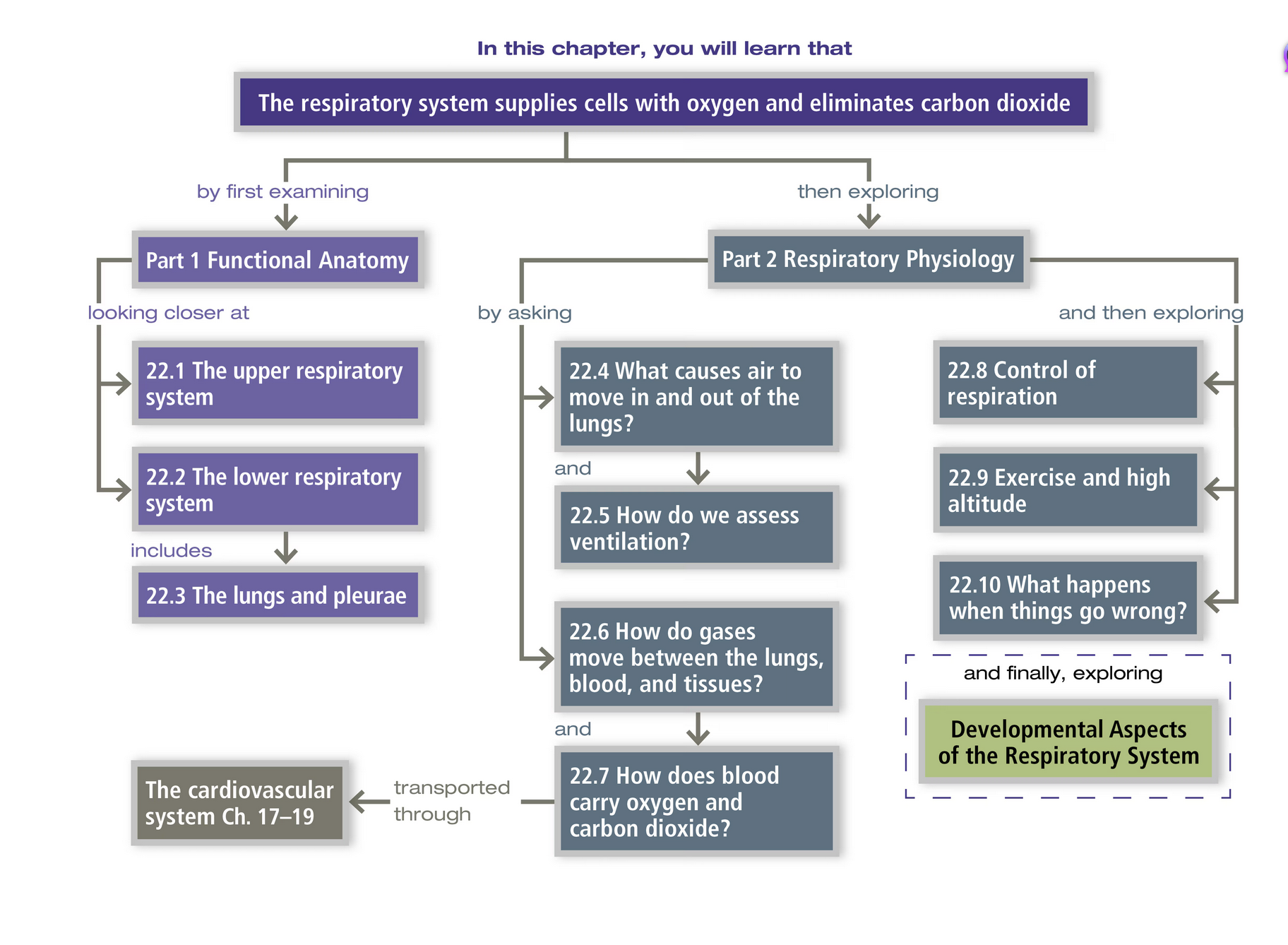
Learning Outcomes
22.4. Volume changes cause pressure changes, which cause air to move
LO 22.4.1 Explain the functional importance of the partial vacuum that exists in the intrapleural space.
LO 22.4.2 Relate Boyle’s law to events of inspiration and expiration.
LO 22.4.3 Explain the relative roles of the respiratory muscles and lung elasticity in producing the volume changes that cause air to flow into and out of the lungs.
LO 22.4.4 List several physical factors that influence pulmonary ventilation.
22.5 Measuring pulmonary volumes, capacities, and flow rates helps us assess ventilation
LO 22.5.1 Explain and compare the various lung volumes and capacities.
LO 22.5.2 Define dead space.
LO 22.5.3 Indicate types of information that can be gained from pulmonary function tests
22.6 Gases exchange by diffusion between the blood, lungs, and tissues
LO 22.6.1 State Dalton’s law of partial pressures and Henry’s law.
LO 22.6.2 Describe how atmospheric and alveolar air differ in composition, and explain these differences.
LO 22.6.2 Relate Dalton’s and Henry’s laws to events of pulmonary and tissue gas exchange
22.7 Oxygen is transported by hemoglobin, and carbon dioxide is transported in three different ways
LO 22.7.1 Describe how oxygen is transported in blood.
LO 22.7.2 Explain how PO2, temperature,pH BPG, and PCO affect oxygen loading and unloading from hemoglobin.
LO 22.7.3 Describe carbon dioxide transport in the blood.
22.8 Respiratory centers in the brain stem control breathing with input from chemoreceptors and higher brain centers
LO 22.8.1 Describe the neural controls of respiration.
LO 22.8.2 Compare and contrast the influences of arterial pH
arterial partial pressures of oxygen and carbon dioxide, lung reflexes, volition, and emotions on respiratory rate and depth.
22.9 Exercise and high altitude bring about respiratory adjustments
LO 22.9.1 Compare and contrast the hyperpnea of exercise with hyperventilation.
LO 22.9.2 Describe the process and effects of acclimatization to high altitude.
22.10Respiratory diseases are major causes of disability and death
LO 22.10.1 Compare the causes and consequences of chronic bronchitis, emphysema, asthma, tuberculosis, lung cancer, and sleep apnea.
______________________________________________________________________________________________
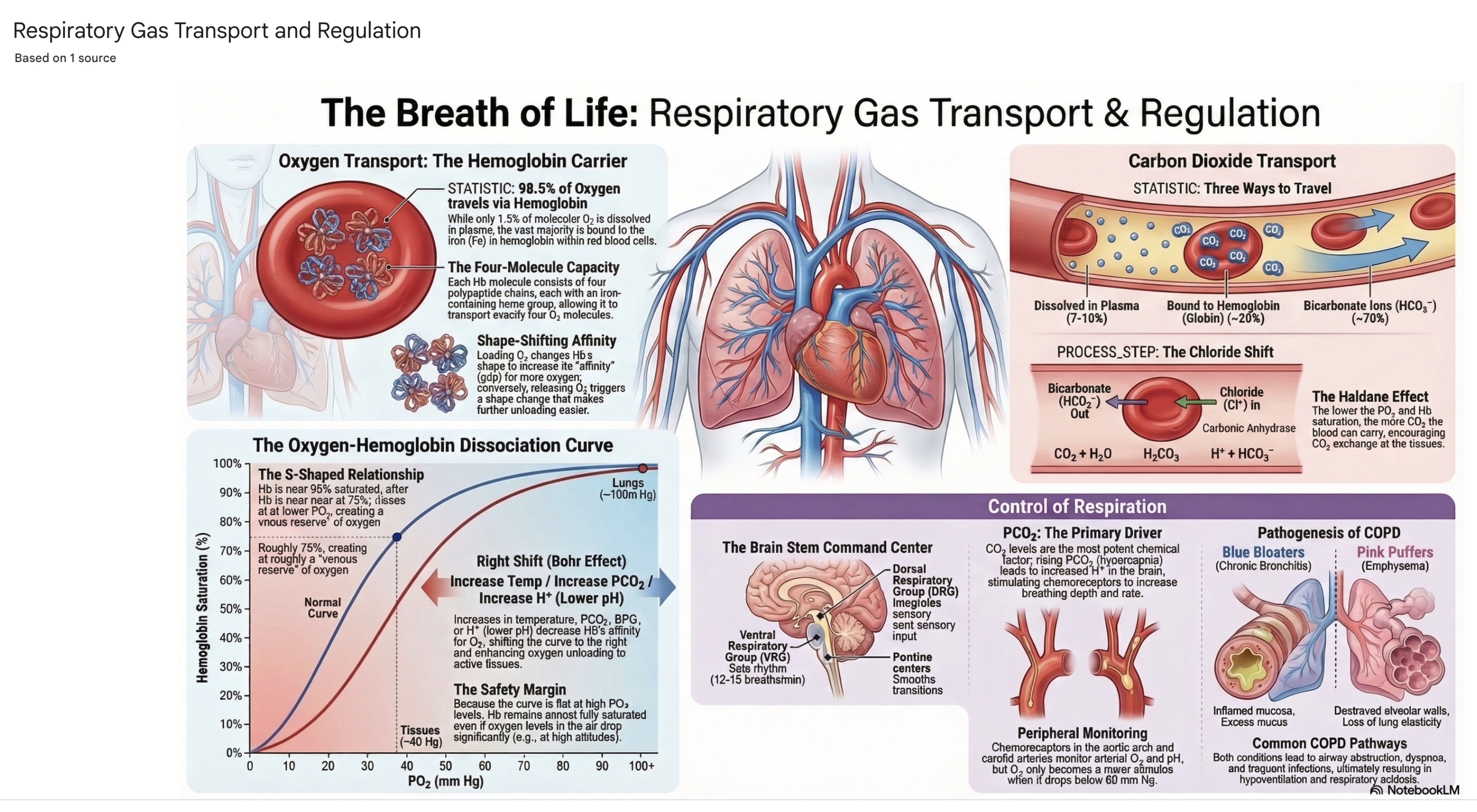
Down load this infographic here
_______________________________________________________________________________________________________________________________________
Notes
Part A
Part B
Part C
________________________________________________________
Knowledge sheets
Answers
Workbook
Answers
________________________________________________________
Learning Outcomes
- 22.1 The upper respiratory system warms, humidifies, and filters air
- LO 22.1.1 Describe the location, structure, and function of each of the following: nose, paranasal sinuses, and pharynx.
- LO 22.1.2 List and describe several protective mechanisms of the respiratory system.
- 22.2The lower respiratory system consists of conducting and respiratory zone structures
- LO 22.2.1 Distinguish between conducting and respiratory zone structures.
- LO 22.2.2 Describe the structure, function, and location of the larynx, trachea, and bronchi.
- LO 22.2.3 Describe the makeup of the respiratory membrane, and relate structure to function.
- LO 22.2.4 Identify the organs forming the respiratory passageway(s) in descending order until you reach the alveoli.
- 22.3 Each multilobed lung is surrounded by its own pleurae
- LO 22.3.1 Describe the gross structure of the lungs and pleurae.
22.4. Volume changes cause pressure changes, which cause air to move
LO 22.4.1 Explain the functional importance of the partial vacuum that exists in the intrapleural space.
LO 22.4.2 Relate Boyle’s law to events of inspiration and expiration.
LO 22.4.3 Explain the relative roles of the respiratory muscles and lung elasticity in producing the volume changes that cause air to flow into and out of the lungs.
LO 22.4.4 List several physical factors that influence pulmonary ventilation.
22.5 Measuring pulmonary volumes, capacities, and flow rates helps us assess ventilation
LO 22.5.1 Explain and compare the various lung volumes and capacities.
LO 22.5.2 Define dead space.
LO 22.5.3 Indicate types of information that can be gained from pulmonary function tests
22.6 Gases exchange by diffusion between the blood, lungs, and tissues
LO 22.6.1 State Dalton’s law of partial pressures and Henry’s law.
LO 22.6.2 Describe how atmospheric and alveolar air differ in composition, and explain these differences.
LO 22.6.2 Relate Dalton’s and Henry’s laws to events of pulmonary and tissue gas exchange
22.7 Oxygen is transported by hemoglobin, and carbon dioxide is transported in three different ways
LO 22.7.1 Describe how oxygen is transported in blood.
LO 22.7.2 Explain how PO2, temperature,pH BPG, and PCO affect oxygen loading and unloading from hemoglobin.
LO 22.7.3 Describe carbon dioxide transport in the blood.
22.8 Respiratory centers in the brain stem control breathing with input from chemoreceptors and higher brain centers
LO 22.8.1 Describe the neural controls of respiration.
LO 22.8.2 Compare and contrast the influences of arterial pH
arterial partial pressures of oxygen and carbon dioxide, lung reflexes, volition, and emotions on respiratory rate and depth.
22.9 Exercise and high altitude bring about respiratory adjustments
LO 22.9.1 Compare and contrast the hyperpnea of exercise with hyperventilation.
LO 22.9.2 Describe the process and effects of acclimatization to high altitude.
22.10Respiratory diseases are major causes of disability and death
LO 22.10.1 Compare the causes and consequences of chronic bronchitis, emphysema, asthma, tuberculosis, lung cancer, and sleep apnea.
______________________________________________________________________________________________

Down load this infographic here
_______________________________________________________________________________________________________________________________________
Notes
Part A
Part B
Part C
________________________________________________________
Knowledge sheets
Answers
Workbook
Answers
________________________________________________________